Redesigned key pages
Improving discoverability, credibility, and conversion across Proxify’s evaluation journey
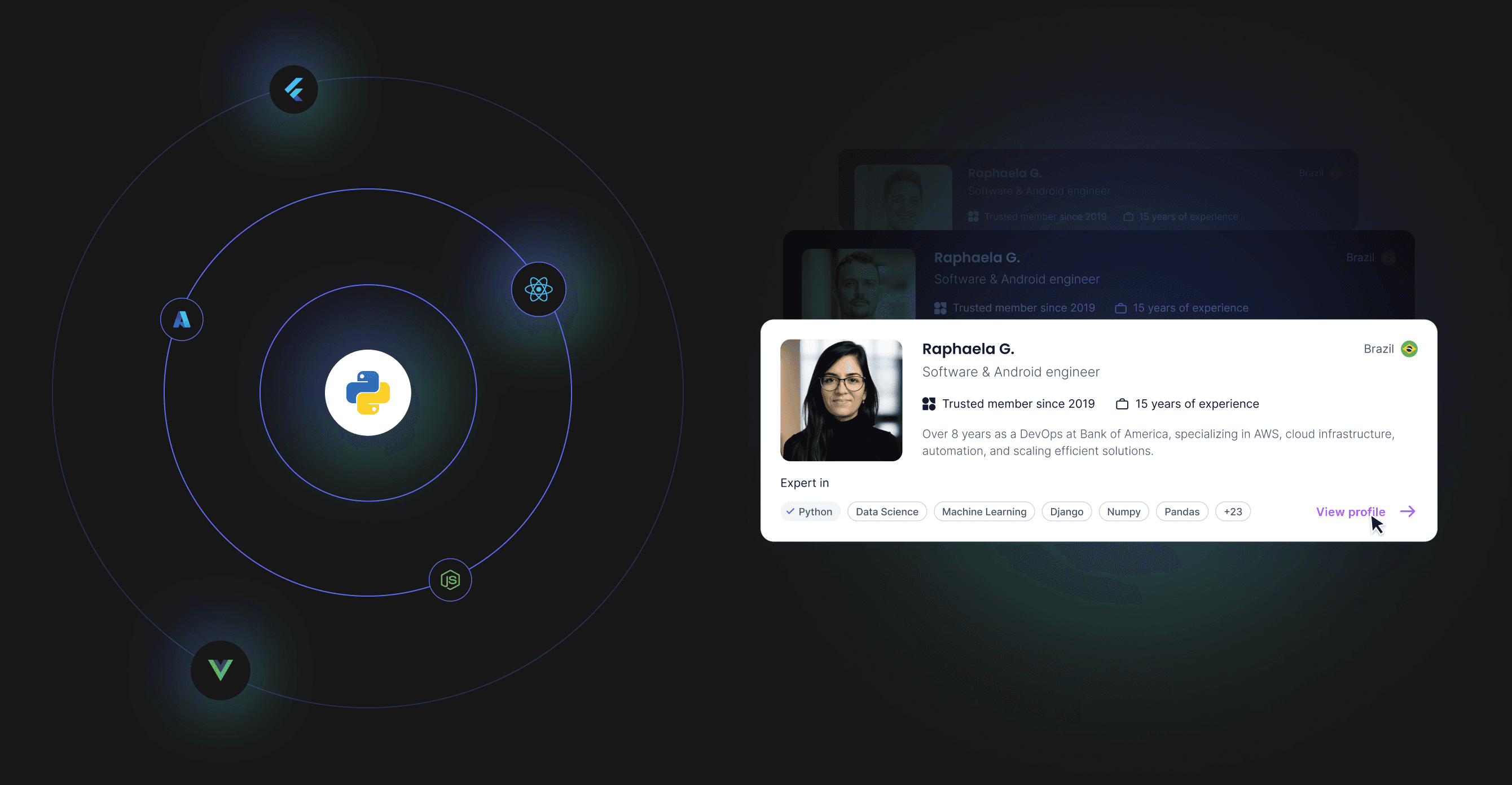
Challenge
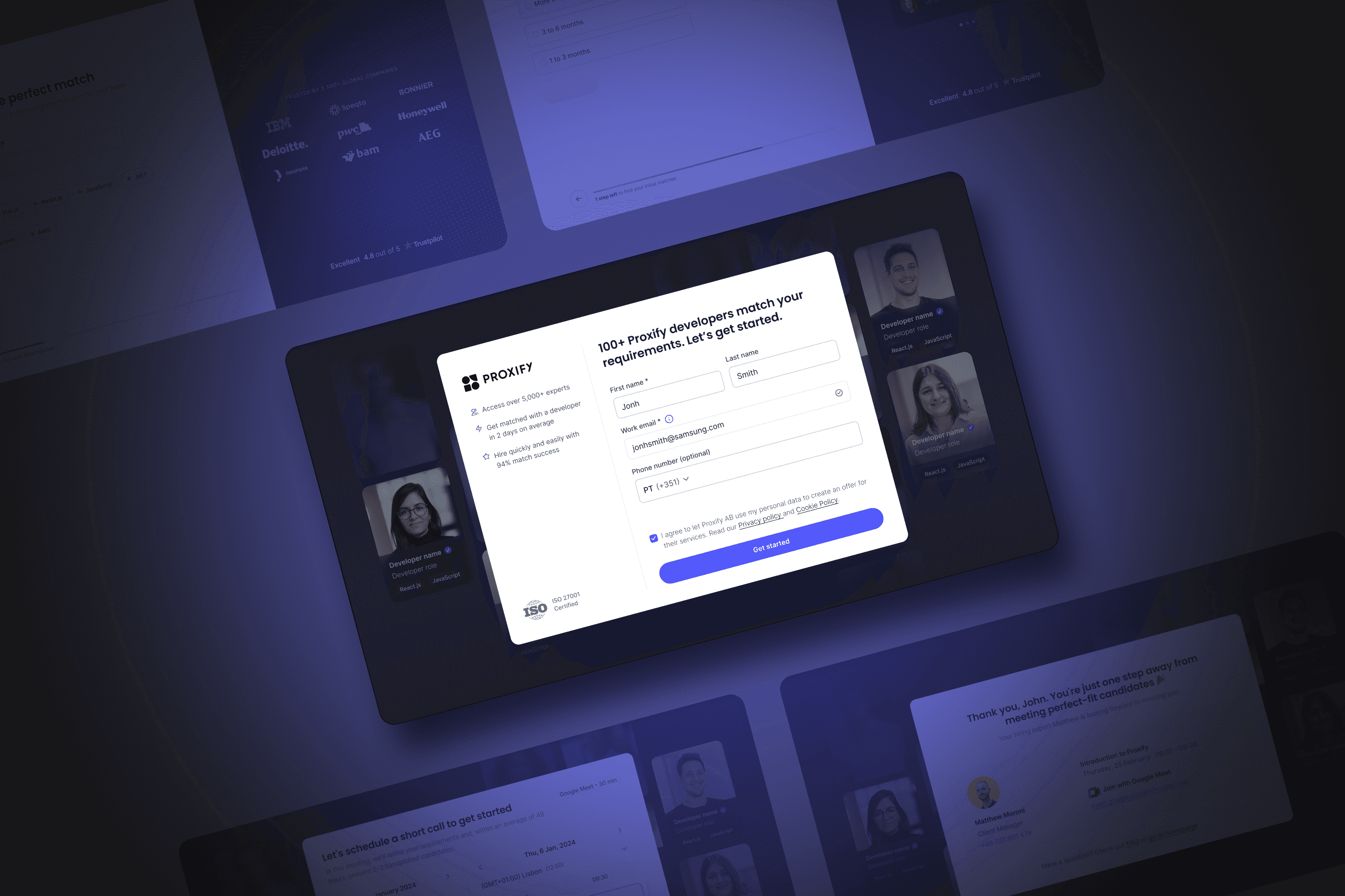
Proxify’s website is a key place where potential clients decide whether they can trust our developers and our process. But a usability study with 10 participants revealed several issues across the sourcing, discovery, and conversion stages. Users found some profiles too polished to feel real, struggled to locate important information, and often hit blockers like forced calls. Many expected to browse real developer profiles first but were pushed into talking to sales too early, causing confusion and drop-offs. These insights made it clear that we needed to redesign the pages that shape first impressions, trust, and user intent.
Solution
We focused on five key pages informed by user research.
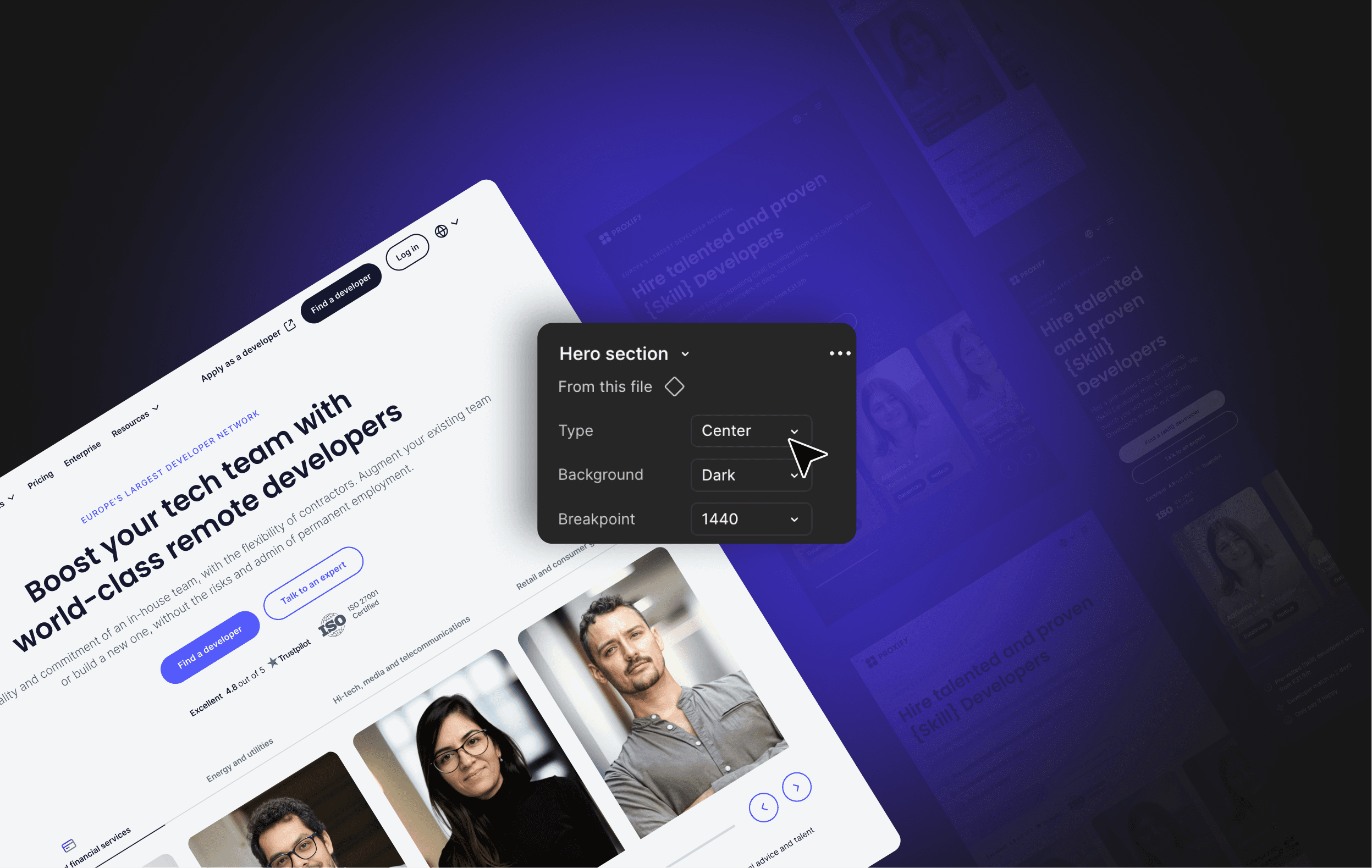
About Us — redesigned to showcase real people, culture, and how Proxify works, building trust from the first interaction.
Vetting & Matching — clarified our developer evaluation and matching process, helping users quickly understand our value and credibility.
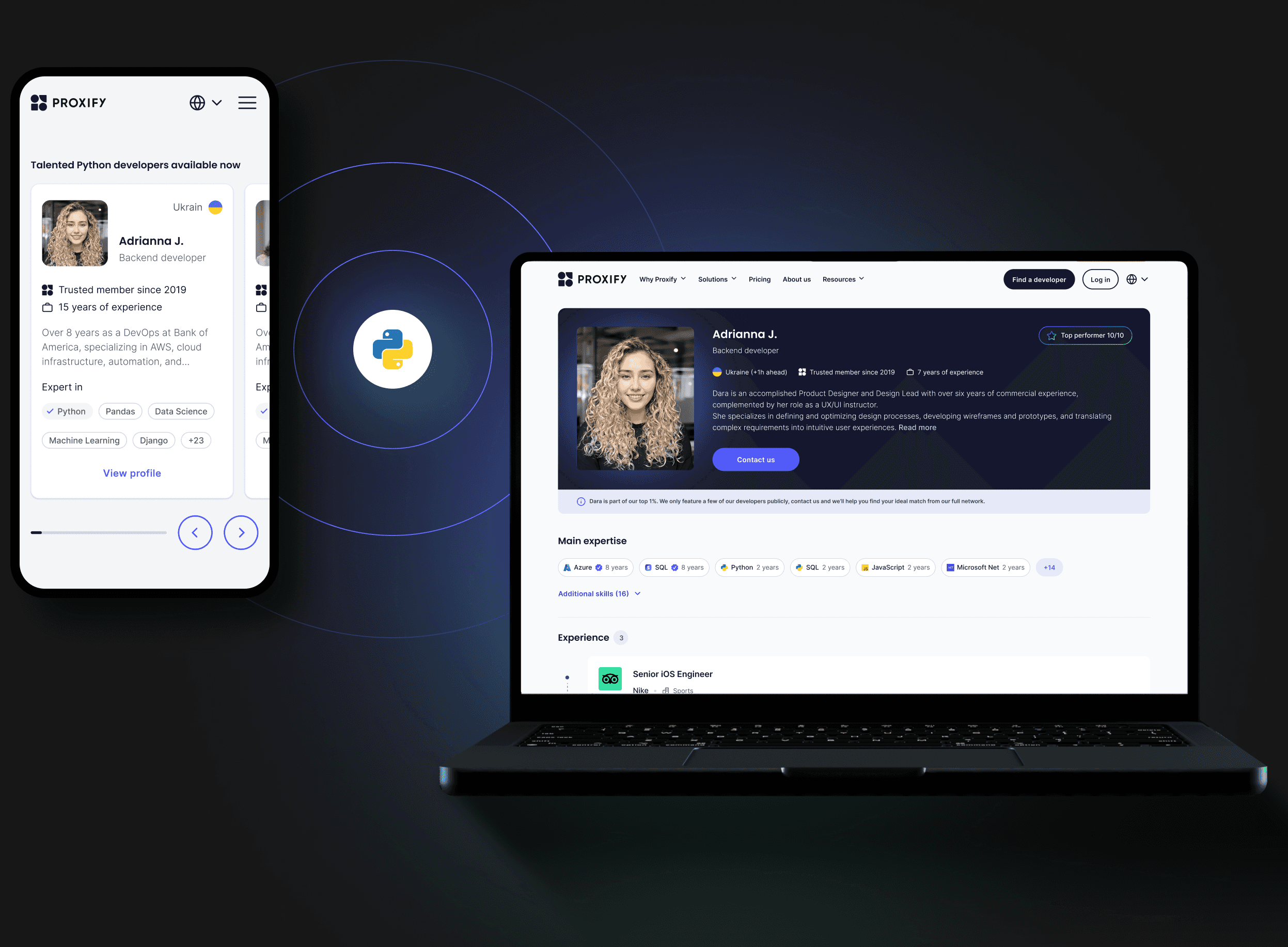
Skills & Developer Profiles — updated for clearer, realistic skills, visible experience, authentic photos, and intuitive scanning, making profiles more credible and easy to explore.
These changes created a transparent, consistent, and user-centered experience across critical decision-making pages.
Results
The redesign significantly improved clarity, trust, and engagement. Users now better understand who Proxify is and how our vetting works, while the updated Skills and Developer Profile pages increased intent to explore talent.
These changes led to:
+35% increase in time spent on the website
+22% increase in clicks leading to the hiring form
Stronger, more confident evaluation journey overall
TL; DR
Research showed gaps in trust, clarity, and discoverability that kept users from reaching the hiring form with the right intent. Redesigning the About Us, Vetting & Matching, Skills, and Developer Profile pages improved transparency and alignment with user expectations—driving more confident, high-intent traffic to the hiring form.
the process
1 - DISCOVERY ↓
Through user interviews, we uncovered major gaps in transparency, trust, and discoverability — especially around developer profiles, our vetting process, and understanding who Proxify is.
2 - WIREFRAMES ↓
Using these insights, we prioritised the pages that most shape first impressions and intent: About Us, Vetting & Matching, Skills, and Developer Profiles.
3 - DESIGN ↓
We redesigned these pages to build trust, clearly explain our value, and make talent easier to evaluate — creating a more transparent, credible, and intuitive experience.
4 - KEY LEARNINGS ↓
Cross-team collaboration was essential, and user expectations around transparency and self-service proved crucial. Clearer storytelling and more realistic profiles strengthened trust and improved early-stage engagement.
DISCOVERY
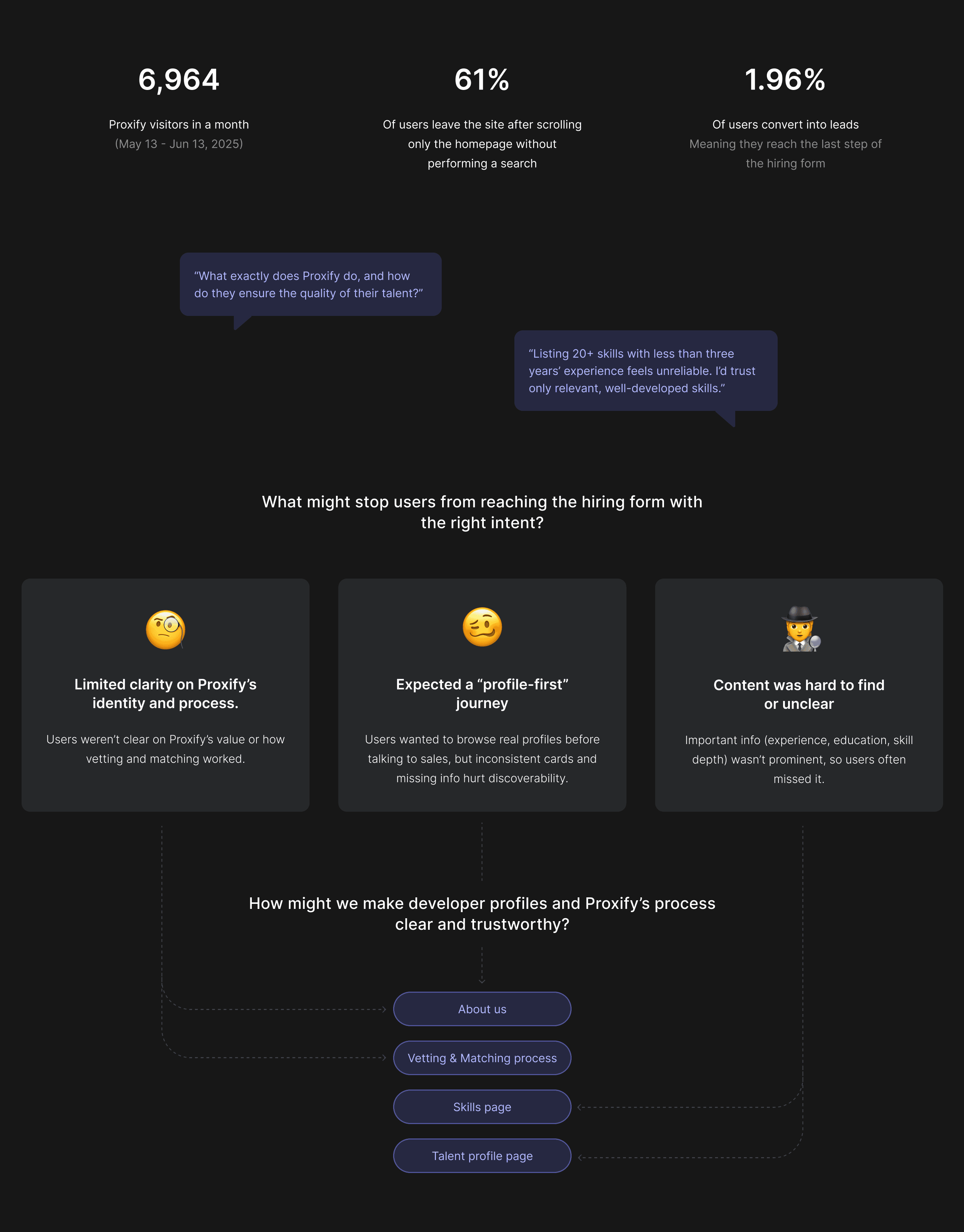
To uncover what was blocking confident evaluation, we ran a usability baseline study with 10 potential clients and conducted interviews across the sourcing → discovery → conversion journey.
Observed how users naturally browse hiring platforms to understand expectations and mental models (“profile-first,” self-serve).
Assessed how users interpreted our About, Skills, and Profile pages to uncover trust gaps and missing clarity.
Identified behavioural patterns showing where crucial info (experience, education, enterprise skills) was overlooked.
Ran competitive analysis to map industry standards, transparency norms, and trust patterns.
Collected input from Client Managers, Sales, and Marketing to connect user insights with internal realities.
These insights revealed clear gaps in transparency, credibility, and discoverability — all limiting the intent and confidence users had before reaching the hiring form.
WIREFRAMES
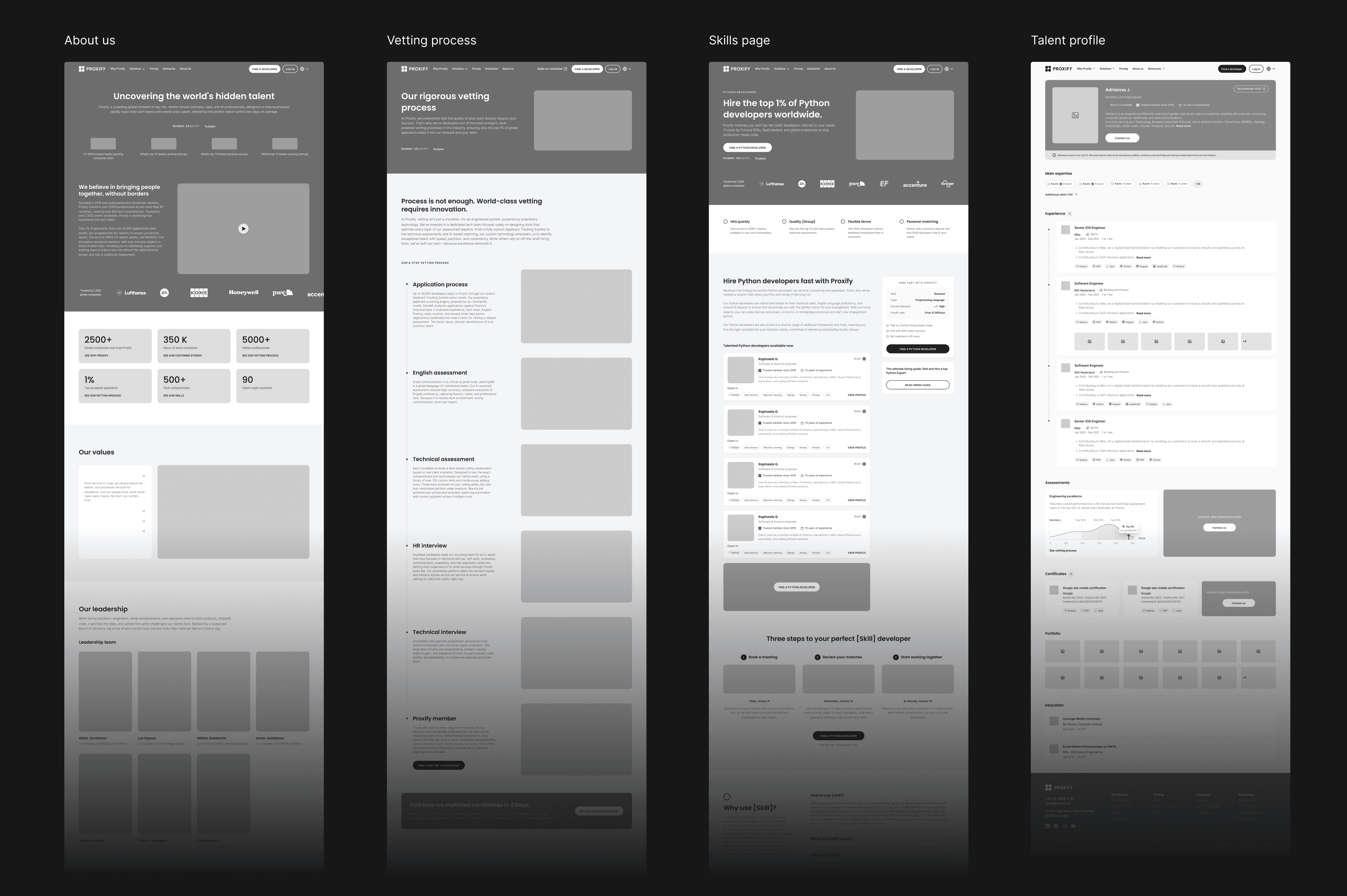
Based on the research, I worked with PM and stakeholders to define a clear focus for the redesign. We prioritised the pages that shape first impressions and early-stage evaluation:
About Us — to build trust and clearly explain who Proxify is.
Vetting & Matching — to explain our process and what differentiates us.
Skills page — to help users explore talent in a structured, credible way.
Developer Profile — to present transparent, realistic developer examples.
Wireframes were used to validate the concepts and align content hierarchy and copy with stakeholders.
DESIGN
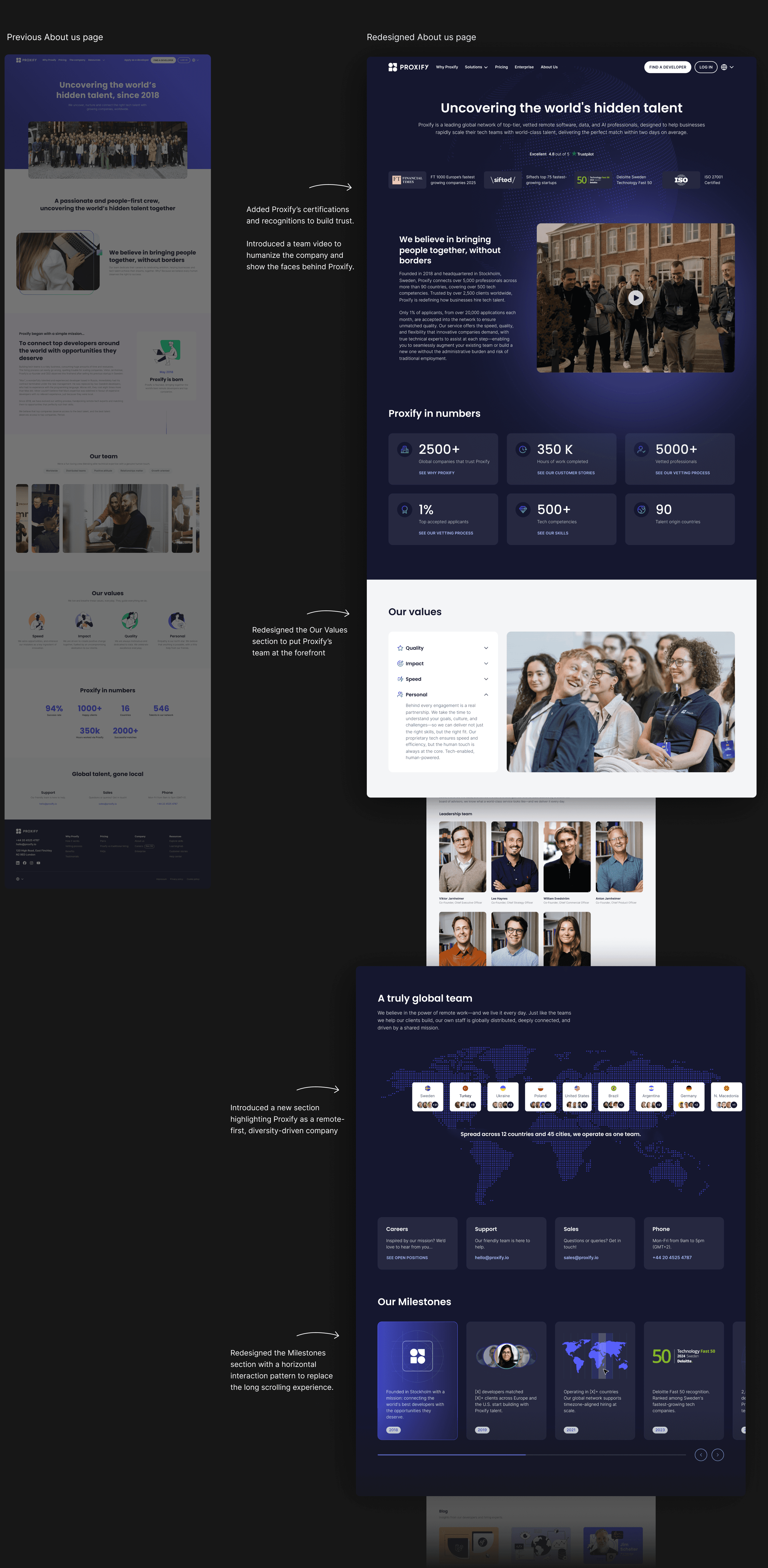
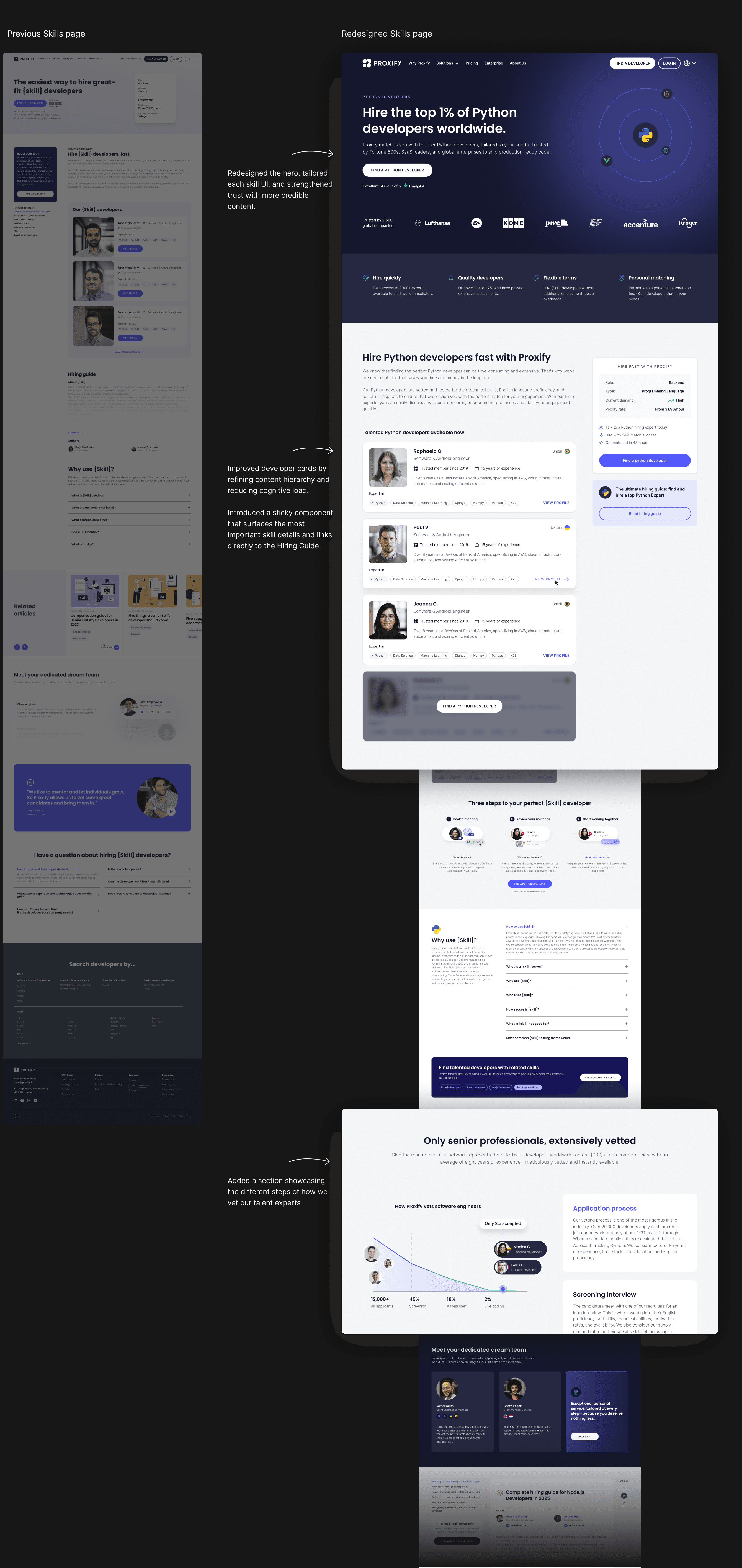
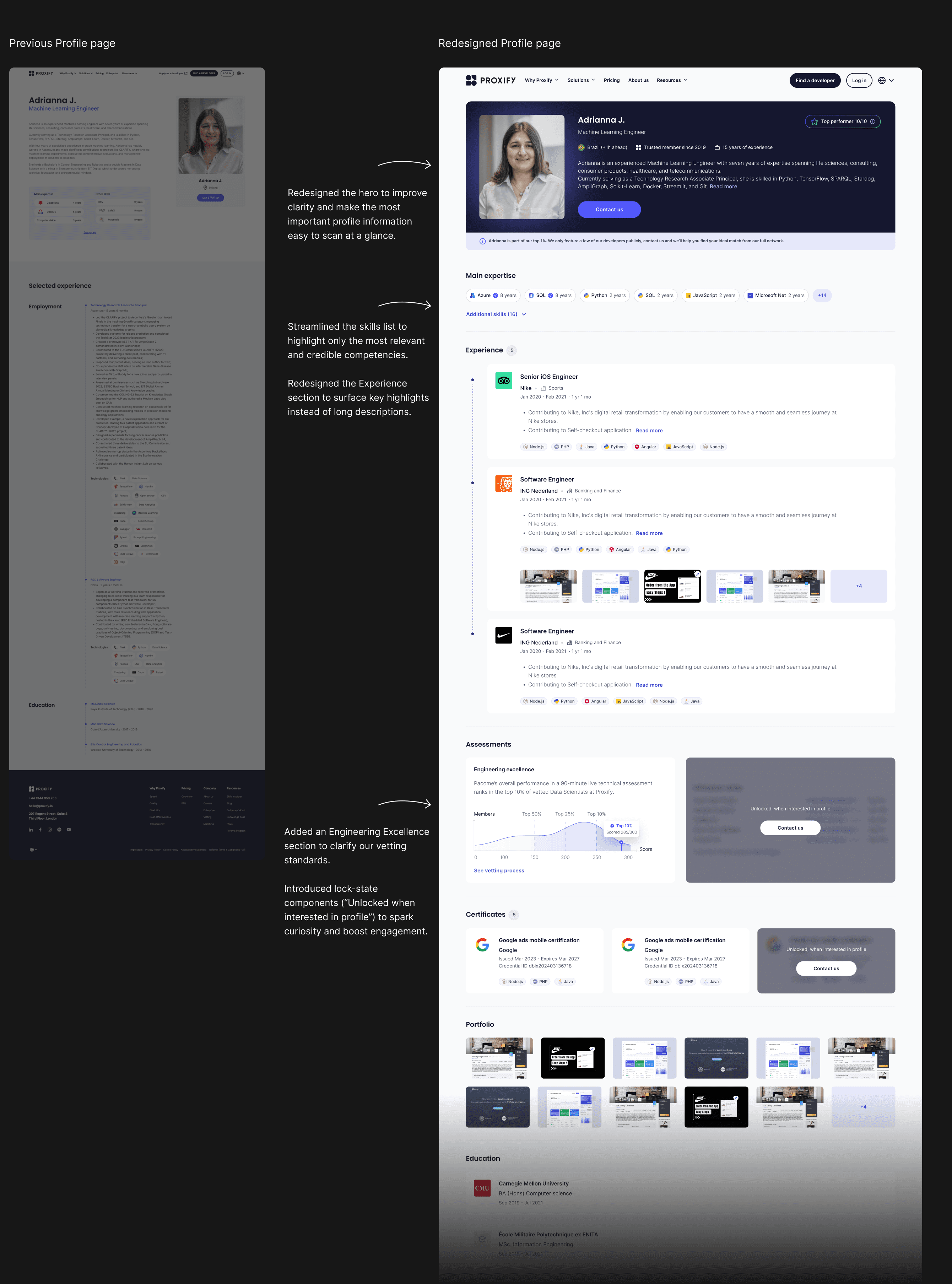
Profile Page — Header Behavior (created with Figma Make)
KEY LEARNINGS
This project highlighted how critical early-stage clarity and transparency are for building trust. Users consistently preferred real people, real processes, and realistic developer examples over polished marketing narratives.
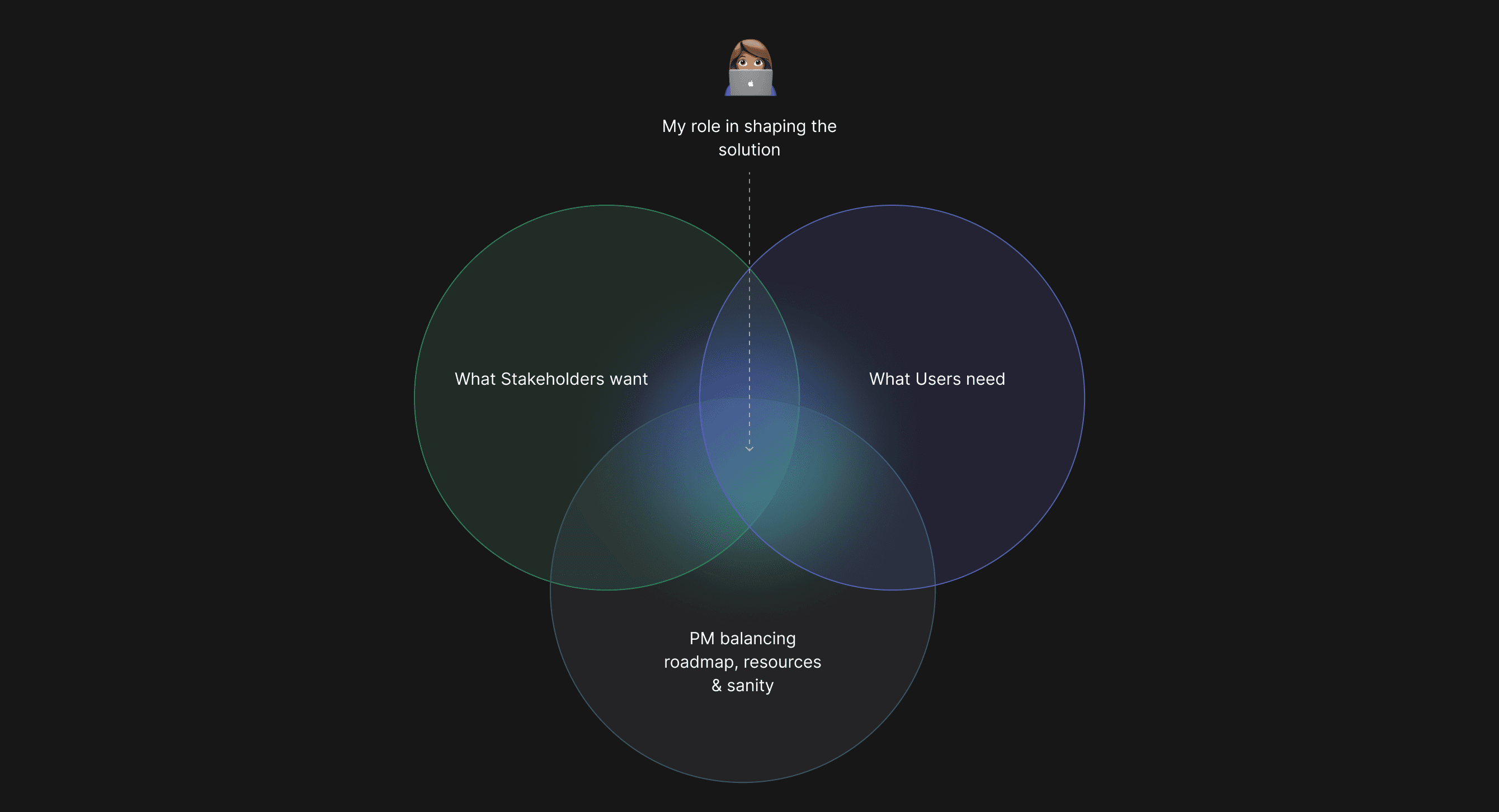
A key challenge was balancing business priorities with user expectations. Proxify’s model relies on a tailored, high-value matching process — meaning full developer profiles can’t be openly revealed. Yet users expect a more transparent, self-service, profile-first journey where they can explore talent before speaking to sales. Finding the middle ground became essential.
see also